 Provo
Provo House Mouse Control in Provo, UT
The gray mouse living behind your stove isn't visiting — it moved in. We remove house mice with trapping that keeps ahead of their breeding, then seal the gaps that let them in.
Call (385) 406-1774
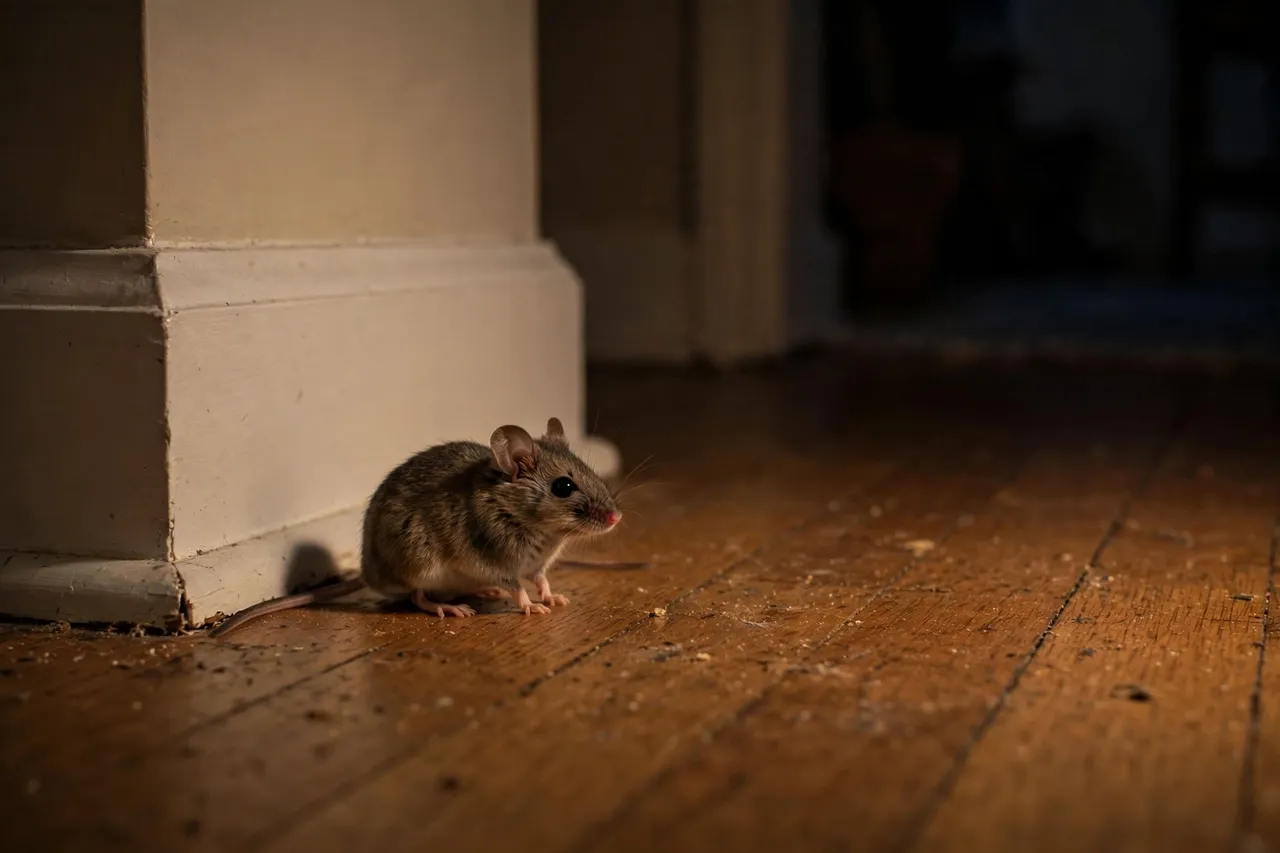
The house mouse is exactly what its name says: a mouse that has adapted to live with people full-time. Unlike its deer mouse cousin, it rarely ventures far from a building, and inside a building it rarely ventures far from food. It is small and plain — dusty gray-brown from nose to tail, belly included — with ears and eyes noticeably smaller than a deer mouse's. Homeowners usually meet it as a gray blur along a baseboard, droppings in a drawer, or rustling inside a kitchen wall at night.
In Provo, house mice are the default mouse of the older neighborhoods — Maeser, Franklin, Dixon, the streets around downtown and BYU — where settled homes offer dozens of small gaps, and of any home with a cluttered garage, a bird feeder, or pet food stored in an open bag. They do not need fall to move in. A house mouse problem can start in any month, which is why it so often goes unnoticed until the population is big enough to be obvious.
House Mouse Control, Done Right
House mouse work is a numbers game. The population inside your walls is breeding on a short cycle, so the removal effort has to be bigger and faster than the breeding — half-measures just cull the slow ones. At the same time, most Provo homes with house mice also have open entry points feeding new mice in from the garage and yard. Done right means both halves: aggressive trapping on the real travel routes, and exclusion that closes the building. Skip either half and you will be dealing with mice again within a season.
How We Get It Done
Read the signs. We map droppings, gnaw marks, and greasy rub marks along baseboards and pipe runs to find where mice actually travel and where they nest. House mice use the same routes nightly, and traps belong on those routes — not scattered at random.
Trap at the right density. One or two hardware-store traps will not dent an established population. We set traps in numbers matched to the activity level, placed perpendicular along walls, behind appliances, and in attic and garage travel lanes, then check and reset through the removal period.
Remove the food advantage. We identify what the mice are eating — unsealed pantry goods, pet food, garage bird seed, fallen fruit outside — and tell you exactly what to seal or move so the survivors have nothing to live on.
Seal the building. Garage door corners, the gap under the side garage door, pipe and conduit penetrations, dryer and bath vents, foundation cracks: each one gets closed with chew-proof material. This is where the problem actually ends.
Signs You Need House Mouse Control
Small rice-shaped droppings in kitchen drawers, under the sink, or along the back of counters; gnawed corners on food packaging in the pantry; scratching or light scurrying in kitchen walls, usually heard in the quiet of the night; a stale, musky odor in a closed cabinet or closet; shredded paper, fabric, or insulation gathered into a nest in a drawer, box, or appliance void; and the mouse itself, most often seen at dawn or dusk moving along a wall — house mice hug edges and almost never cross open floor.
One underappreciated sign in Provo homes: the family dog or cat fixating on one spot — the bottom of the stove, a particular cabinet, one section of wall. Pets hear and smell mice long before people notice them. If your cat has taken up a permanent post in front of the dishwasher, believe the cat.
Honest Advice Before You Book
A single house mouse sighting with a few droppings in one spot is a fair DIY project: set several snap traps (more than you think — six is a reasonable start), bait them with a pea-sized amount of peanut butter, place them along the wall where you saw activity, and store pantry food in hard containers starting tonight. Where DIY usually fails is scale and sealing. If you are catching mice week after week, finding droppings in new rooms, or hearing them in multiple walls, the population or the entry points are beyond trap-and-hope. And do not reach for poison as the escalation — poisoned house mice die in wall voids and under floors, and the odor problem that follows is worse than mice, with a real secondary-poisoning risk to the dog or cat that finds a dying mouse first. Call us when the sightings spread, when droppings show up near food, or when a month of your own trapping hasn't finished it.
House Mouse Control FAQs
How fast do house mice multiply?
Fast enough that waiting is the most expensive choice. A female house mouse can produce a litter roughly every three weeks during breeding condition, with several pups per litter, and the young are breeding themselves within about two months. A pair that moves into a garage or wall void in spring can become dozens by fall if food and shelter are steady — which is why a small sighting should be treated seriously.
Where do house mice nest inside a Provo home?
House mice nest close to food — usually within 10 to 30 feet. Common spots are behind the stove and refrigerator, inside the void under kitchen cabinets, in pantry wall voids, in water heater closets, in garage clutter and stored boxes, and in insulation in walls adjacent to the kitchen. If droppings cluster in one area, the nest is almost always nearby.
I keep catching mice but they keep coming. Why?
Either new mice are entering from outside through gaps that were never sealed, or the indoor population is large enough that trapping is not keeping ahead of breeding. Both problems are fixable: the entry points — garage corners, pipe penetrations, vents — have to be found and closed, and trap numbers and placement have to match the actual travel routes. Catching mice forever is a sign the exclusion half of the job was skipped.
Are house mice a health concern or just a nuisance?
Mostly a contamination concern. House mice urinate almost constantly as they travel, and they contaminate far more food than they eat — anything in the pantry with droppings or gnawed packaging should be thrown out. They also chew wiring, which is a genuine fire risk over time. House mice are not the hantavirus species (that is the deer mouse), but food contamination and wiring damage are reason enough to clear them out properly.
Related Mice Control Services
Mice Control
The complete mice control service for Provo homes — inspection, trapping, exclusion, prevention.
Mice Control →Mice in Kitchen & Pantry
When the activity is where your food lives: rapid removal, safe cleanup, and storage fixes.
Mice in Kitchen & Pantry →Mice in Walls
Night scratching in the wall voids — locating the activity and removing the mice traveling there.
Mice in Walls →Mice Multiplying Indoors?
House mice don't slow down on their own. Call Provo Rodent Pros — we'll out-trap the breeding cycle and seal the gaps behind them.
Call (385) 406-1774