 Provo
Provo Roofline Exclusion in Provo, UT
Most homeowners picture mice sneaking in at ground level. A lot of Provo's attic problems walked in from the top. We seal the soffits, returns, and vents where climbing rodents get in.
Call (385) 406-1774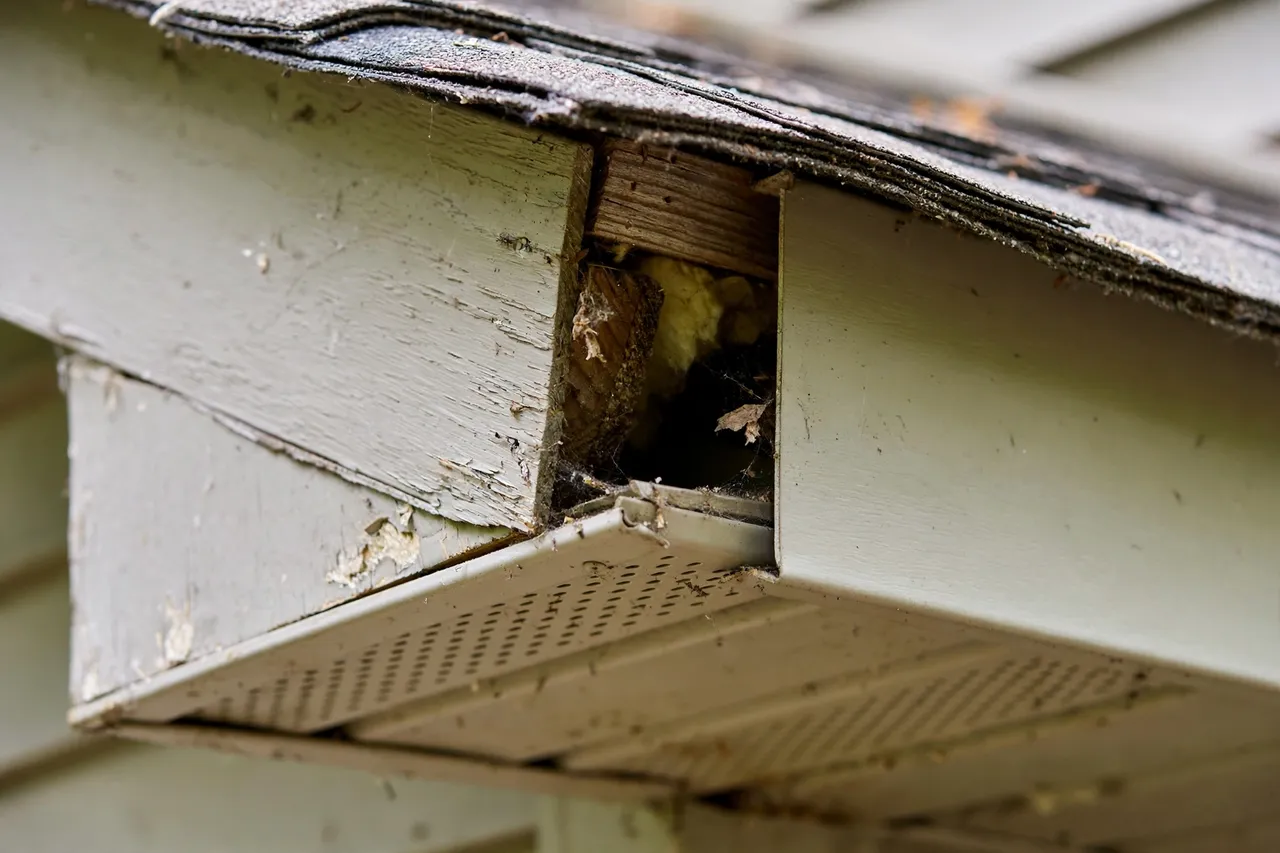
Roofline Exclusion, Done Right
Deer mice — the most common rodent in Utah County homes — climb like they were built for it. Rough stucco might as well be a ladder. So is brick, stone veneer, a downspout, a utility line, and the ivy or juniper growing against the wall. Once a mouse reaches the eave, it looks for what builders left behind: the gap where the soffit panel meets the siding, the open box at a roof return, a chewed corner of fascia, a ridge vent with no screen behind it. From there it's one short squeeze into a warm attic full of insulation to nest in.
This is why ground-level sealing alone so often disappoints. A home can have every foundation gap closed and still host mice all winter, because the actual door was twenty feet up. Roofline exclusion is the upper half of a complete exclusion job, and on homes with attic activity, it's frequently the half that matters most.
How We Get It Done
We inspect from the attic out and the roof down. Inside the attic, droppings concentrate below entry points, and daylight leaks pinpoint open gaps. Outside, we work the eave line from a ladder, checking soffit seams, returns, fascia corners, and the edge where roofing meets the wall.
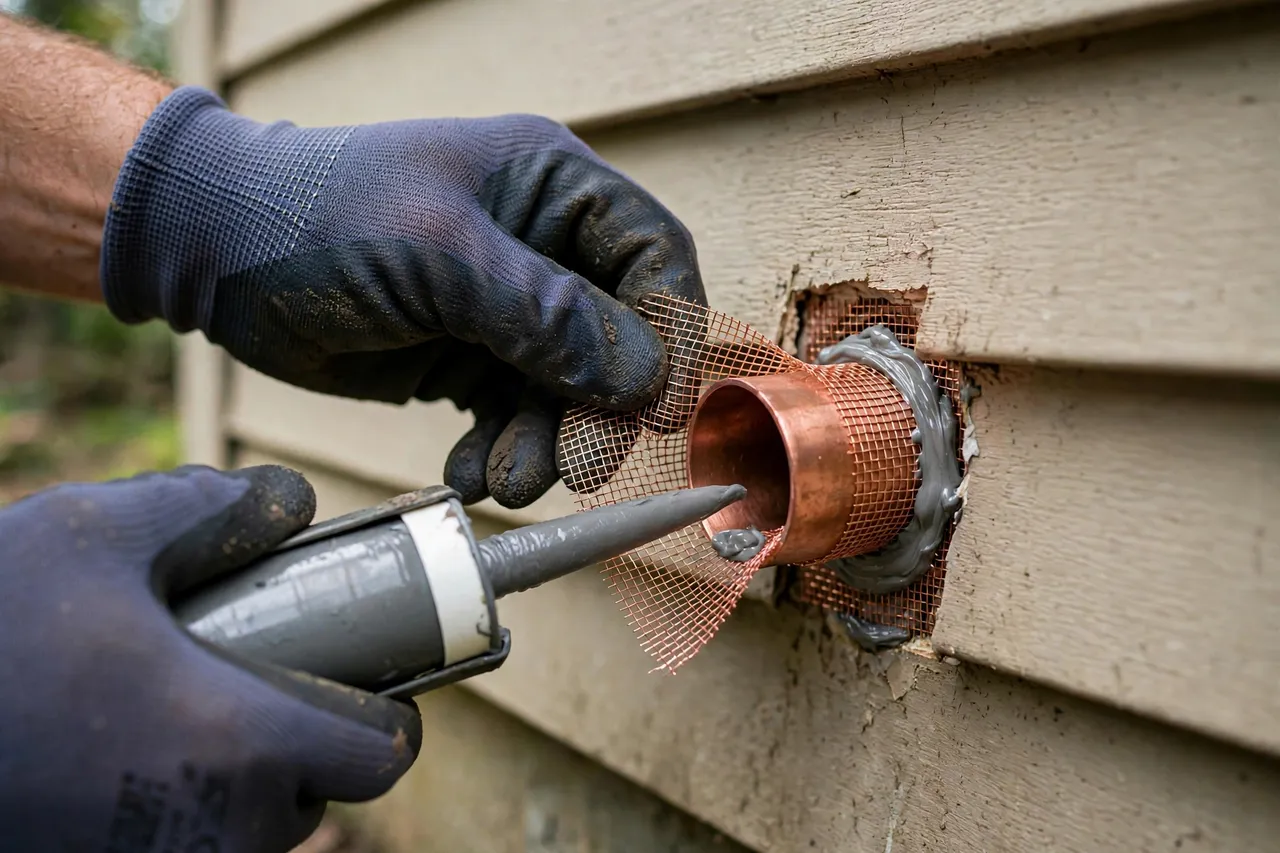
Then we seal with materials that belong outdoors. Gaps at soffits and returns get backed with copper mesh or hardware cloth and finished so weather stays out too. Open venting gets screened with hardware cloth — never blocked solid, because your attic needs its airflow. Chewed or rotted fascia sections get metal flashing or replacement so the seal has something solid to hold. Where vegetation is the ladder, we'll show you exactly what to trim back so the route up disappears.
Timing matters: roofline sealing happens after any rodents currently in the attic are removed through our rodent removal service. Sealing first would trap them above your ceiling with nowhere to go but into the walls.
Signs You Need Roofline Exclusion
Scratching or scampering in the attic or ceiling, especially at night and especially starting in fall. Droppings in the attic insulation concentrated near the edges rather than the middle. Trees, vines, or shrubs touching the roof — a standing invitation. Visible gaps at the eaves, daylight showing at the attic's edge, or soffit panels that have pulled loose. Birds or wasps nesting in the eaves in past seasons — if they found openings, rodents can too. And if you've sealed the foundation and garage and still hear attic activity, the roofline is the first place to look.
Honest Advice Before You Book
Roofline work involves ladders, height, and sealing things you can't inspect from the ground afterward — so choose whoever does it carefully. Ask to see photos of the gaps before they're sealed and the finished work after; that's a reasonable request and we take them as part of the job. Be cautious with anyone who wants to "foam the eaves" — chewed-through foam at the roofline is one of the most common failed fixes we remove. Finally, understand what roofline exclusion can't do alone: it closes the top of the house, but if the garage and foundation are open, rodents simply move downstairs. It works as part of a complete proofing picture, not as a single magic fix.
What we typically find on Provo rooflines. Homes along the east bench, where lots slope and roofs sit close to hillside vegetation, tend to show the heaviest pressure — mice travel from brush to branch to shingle without touching the ground. In the older neighborhoods, the pattern is different: decades of roofing layers, replaced vents, and patched soffits leave mismatched seams, and the gaps hide exactly at those transitions. Two-story homes with complex rooflines — multiple returns, valleys, and dormers — simply have more linear feet of eave to inspect, and prior work that checked "the roof" in ten minutes almost certainly didn't check all of it. The audit takes the time it takes.
Roofline Exclusion FAQs
How do mice get onto my roof in the first place?
Mice are excellent climbers. Rough stucco, brick, and stone give them easy footing, and ivy, vines, tree branches touching the roof, utility lines, and downspouts all work as ladders. If vegetation touches your roofline, rodents have a route up.
What part of the roofline do rodents actually enter through?
The usual openings are gaps where the soffit meets the wall, open roof returns (the boxed ends of eaves), loose or chewed fascia, gaps under roof tiles and shingles at the eave edge, and unscreened ridge or attic vents. The attic side usually shows droppings right below the entry.
Will sealing the roofline trap heat or moisture in my attic?
Not when it's done right. Vents that are meant to move air get screened with hardware cloth, not blocked, and soffit ventilation stays functional. We close gaps to rodents while keeping the attic breathing the way it was designed to.
I only hear noises in the attic in winter. Is it still worth sealing now?
Yes — winter attic noise usually means rodents moved in during fall and are settled. Sealing after removal stops next fall's move-in before it starts, and it keeps this winter's population from growing. Roofline work is easiest to schedule before the fall rush.
Related Services
Entry Point Sealing
The ground-level partner to roofline work — every penetration, corner, and crack in the lower envelope, audited and sealed.
Seal the entries →Rodent Proofing
Sealing plus the vegetation, yard, and storage factors that invite rodents up your walls in the first place.
Proof the whole property →Rodent Removal
Attic activity has to be cleared before the roofline closes. Thorough removal for attics, walls, and crawl spaces.
Remove what's inside →Hearing Noises in the Attic?
Provo Rodent Pros is open Mon–Sat, 7am–7pm. Call for a roofline inspection and find out how they're getting in.
Call (385) 406-1774