 Provo
Provo Voles Damaging Your Lawn? What Provo Homeowners Need to Know
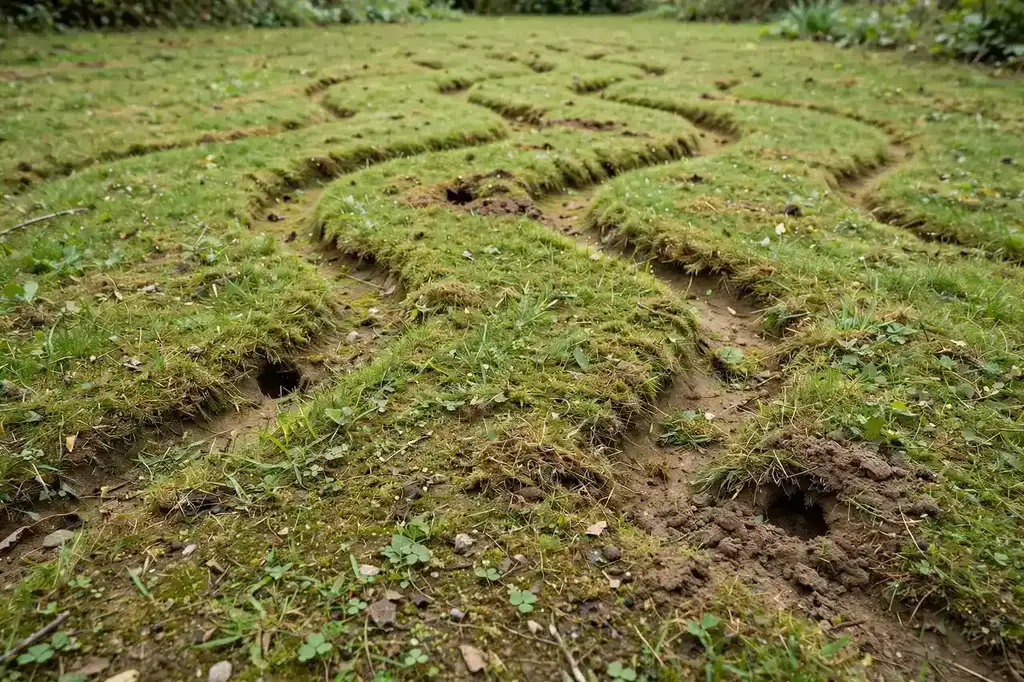
You pull the last of the snow off the lawn in March and find it: a maze of dead, clipped grass paths winding across the yard, and a young apple tree with the bark chewed off in a ring at its base. That's not winter kill and it's not moles. In Provo and across Utah County, that signature belongs to the meadow vole — a small, stocky rodent that does most of its damage out of sight, under snow and ground cover.
Reading the Runway System
Voles build and maintain visible runway systems at the surface: paths one to two inches wide where they clip grass short as they travel between burrow openings and feeding areas. You'll see the runs most clearly where lawn meets garden beds, along fence lines, under low shrubs, and anywhere grass grows long or cover is thick. Small, clean burrow holes about the size of a golf ball open onto the runs. In garden beds, look for clipped stems, missing seedlings, and bulbs that vanish — voles eat tulip and crocus bulbs with enthusiasm. Unlike house-invading rodents, meadow voles are outdoor animals; the lawn, orchard, and garden are their whole world, which is why our vole control in Provo focuses on the yard rather than the house.
Vole or Mole? Settling the Confusion
The two get blamed interchangeably, but the evidence is different. Moles push soil up from below, leaving raised ridges and cone-shaped mounds, and they eat earthworms and grubs — not your grass or tree bark. Voles work on the surface, leaving runways, clipped vegetation, droppings, and gnawed bark. In Utah lawns, moles are comparatively rare, while voles are one of the most common yard pests in the county. If you're seeing runways and girdled trees, you can stop shopping for mole solutions — you have voles.
The Tree Damage Is the Expensive Part
Grass regrows. A girdled fruit tree often doesn't. Voles gnaw bark at and just below the soil line, and when the chewing circles the trunk completely, the tree is cut off from its roots and dies — sometimes not showing it until it fails to leaf out in spring. Utah County's backyard orchards are prime targets: young apple, peach, cherry, and apricot trees with tender bark, planted in mulched basins that give voles perfect hidden cover while they feed. Older trees with thick, rough bark are far less vulnerable. Check every young tree in late winter by gently pulling mulch back from the trunk and looking for gnaw marks and a litter of fine bark shavings.
Seasonal Timing: Hidden in Winter, Revealed in Spring
Voles don't hibernate. Under a stable snowpack they are protected from predators and cold, and they feed and travel all winter in the space between soil and snow. That's why the worst reveal comes at snow melt — weeks of runway building and bark chewing appear all at once. A second damage window opens in fall, when voles expand runways and feed heavily ahead of winter. The practical takeaway: protect trees and clear cover before the snow settles in, and do your damage inspection the week the lawn emerges in spring, while populations can still be addressed before the breeding season accelerates.
What Actually Reduces Vole Damage
Remove cover. Voles avoid crossing open ground where hawks and owls can see them. Keep lawn mowed reasonably short near beds and trees, rake out thick thatch, and clear groundcover and leaf piles away from trunks.
Guard every young tree. A cylinder of quarter-inch hardware cloth around each trunk — a foot or more tall and pressed an inch into the soil — is the single most reliable protection for orchard trees. Check guards each fall; a guard the tree has outgrown can do its own damage.
Pull mulch back. Keep a clear ring of bare soil around trunks. Mulch piled against bark is a hidden feeding station.
Address the population. Habitat changes protect individual trees, but a large, established runway system spanning several yards usually needs direct population reduction as well. That's where professional vole control for lawns comes in — trapping programs placed in the runway systems themselves, timed to the season.
Voles are a neighborhood-scale animal: your yard connects to every yard around it. Consistent cover reduction and tree guards on your property, plus population work when the runways are extensive, is the combination that actually holds.
Frequently Asked Questions
How do I know if I have voles or moles in my lawn?
Voles leave visible surface runways — winding paths of clipped, dead grass across the lawn — plus small open burrow holes. Moles tunnel underground and push up ridges and mounds. In Utah lawns, surface runway damage is overwhelmingly voles; moles are comparatively rare here.
When does vole damage show up in Provo?
The worst damage is usually discovered after snow melt in spring, when runways and girdled trees that were hidden under snow cover are revealed. Voles are active and feeding all winter under the snow. Fresh damage also appears in fall as voles prepare for winter.
How do I protect fruit trees from voles?
Fit each young tree with a cylinder of quarter-inch hardware cloth around the trunk, standing a foot or more above the soil line and buried slightly at the base. Keep mulch and grass pulled back from the trunk so voles have no hidden cover while they feed.
Keep Reading
What Attracts Mice Into Homes?
The food, water, shelter, and warmth that pull rodents toward your house.
Read →Winter Rodent Problems in Provo Homes
What rodents are doing inside — and outside — during the coldest months.
Read →Runways Taking Over the Yard?
We'll map the runway system, protect your trees, and bring the vole population down.
Call (385) 406-1774