 Provo
Provo Rat vs. Mouse: How to Tell What You Have
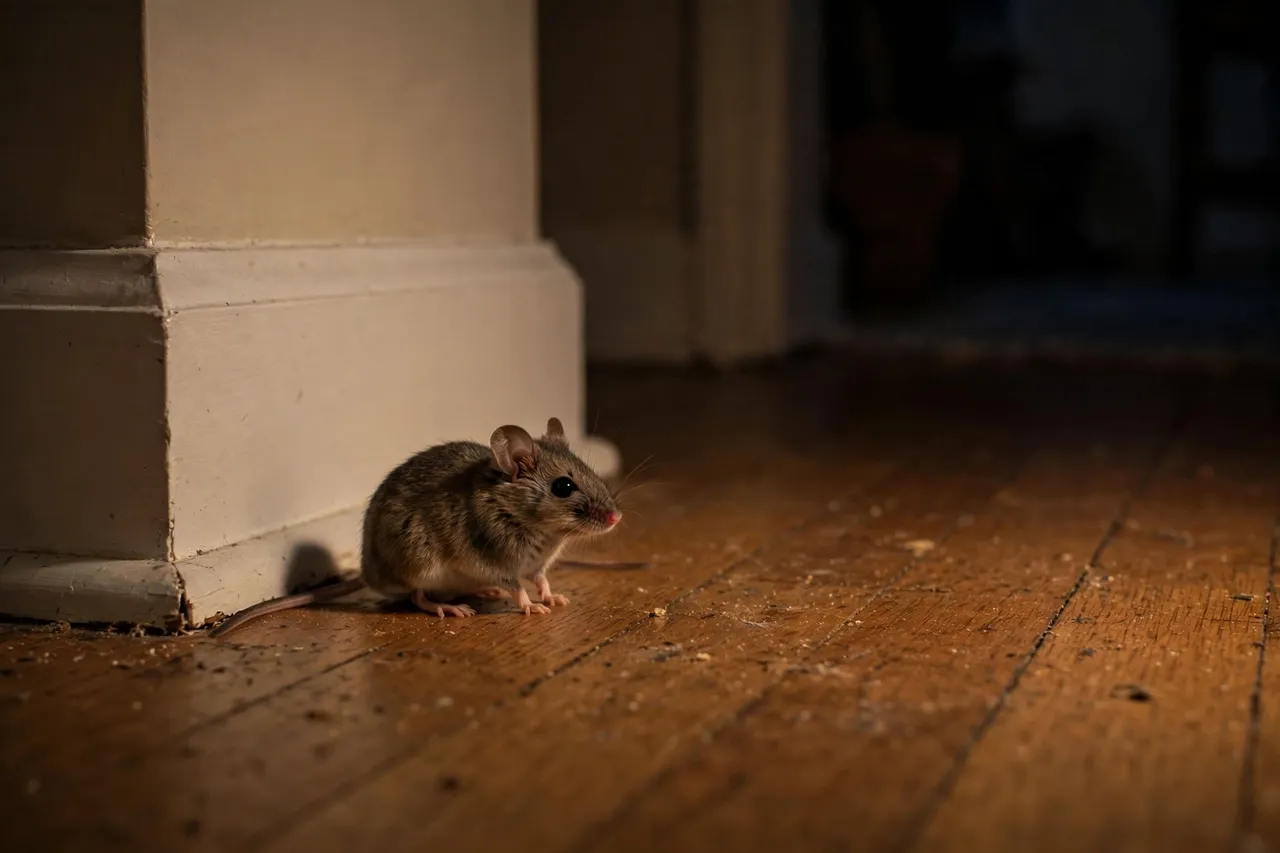
"Something is in the attic" is where most calls start — but the right response to a mouse and the right response to a rat are different jobs. Trap sizes differ. Entry points differ. The damage a rat can do to a seal that stops a mouse is not comparable. Fortunately, rodents leave clear evidence, and most homeowners can make a solid first identification from three things: droppings, sounds, and damage.
Droppings: The Fastest Answer
Size settles most cases. Mouse droppings are small — a few millimeters long, thin, pointed at the ends, like dark grains of rice scattered along walls, in drawers, and behind appliances. One mouse produces them by the dozen nightly, so mouse evidence usually looks like a light, widespread scatter. Rat droppings are in another league: Norway rat droppings run roughly three-quarters of an inch long, blunt-ended and plump, more like raisins or small olives, and they tend to concentrate in specific spots — a corner of the garage, along a run in the crawl space, near a food source. If what you are finding looks impressively large, plan for rats. One caution: never handle droppings bare-handed, and do not dry-sweep them — in Utah, deer mouse droppings deserve the ventilate-and-wet-clean method described in our safety guide.
Sounds: Light Feet vs. Heavy Feet
Mice are quiet tenants. Their sounds are light scratching, faint scurrying, and soft gnawing, mostly in the hours after dark and before dawn, and they seem to come from inside walls and ceilings close to where you sleep. Rats announce themselves more: heavier footsteps overhead or in the crawl space, louder gnawing, occasional thumps, and sounds that can carry in daytime as well as at night. A useful rule from inspections: if you are lying in bed wondering whether you imagined it, think mice. If the whole household hears it clearly, think bigger animal. And if the noise is heaviest at dawn and dusk with real thumping, consider squirrels — a different animal entirely, and common in Provo's tree-lined neighborhoods.
Damage: The Scale Gives It Away
Both animals gnaw constantly, but the scale differs. Mice leave fine, paired grooves — nibbled corners on food packaging, small holes in bags and boxes, shredded paper and insulation gathered into a soft nest a few inches wide. Rats leave coarse damage: gnawed wood edges with visible tooth width, holes chewed through plastic bins and even soft materials around pipes, grease marks that are wider and darker along their runs, and burrows — Norway rats dig, and a burrow entrance a few inches wide along a foundation, under a shed, or near a ditch is a rat signature no mouse makes. Rub marks deserve a mention for both: mice leave faint smudges; rats, traveling the same routes with bigger, oilier bodies, leave pronounced dark streaks at the height of their path along walls and pipes.
Location Clues in Utah Homes
Where the evidence sits is the final filter. In Utah County, rats almost always means Norway rats, and Norway rats are ground animals: basements, crawl spaces, garages, burrows along foundations, and properties near water — the Provo River, canals, ditches, and drainage corridors — or near concentrated food waste. Roof rats, the climbing attic rats of warmer states, are rare in Utah; do not assume an attic noise is a rat. Mice, by contrast, go anywhere — attics especially, reached through rooflines, plus walls, kitchens, and garages. Attic droppings of rice-grain size with light scratching at night is the classic Provo deer mouse or house mouse picture, repeated in thousands of valley homes each fall.
Why the Answer Changes the Plan
Identification is not trivia; it is the plan. Rat entry points are bigger and usually at ground level, and sealing against rats demands materials that withstand serious chewing. Mouse work concentrates on pencil-width gaps, often at the roofline. Traps, placement, cleanup scope — all of it follows the species. If your evidence is ambiguous, an inspection resolves it in one visit; and if it does turn out to be rats, our rat control service is built for the heavier job, just as mice control is tuned for the smaller one.

Quick Questions
Can a mouse dropping and a rat dropping be confused?
By size, they should not be: mouse droppings are a few millimeters long, like grains of rice, while Norway rat droppings are roughly three-quarters of an inch, like plump raisins. If the droppings look big, treat the problem as rats until an inspection says otherwise — the control plan differs significantly.
Do rats live in attics in Utah?
The rats we deal with in Utah County are Norway rats, which prefer ground level — burrows, crawl spaces, basements, and areas near water and food waste. Roof rats, the attic specialists, are rare in Utah. Heavy noise overhead is more often squirrels or a raccoon than rats.
Why does identification matter so much?
Because almost every decision follows from it: trap size and placement, whether the entry points are at ground level or the roofline, how much chewing power the seals must resist, and what cleanup involves. A plan built for mice will fail against rats, and rat-level work is wasted money on mice.
Keep Reading
Signs of Mice in Your Provo Home
The full evidence checklist — droppings, sounds, grease marks, nesting, gnawing.
Read the post →How to Get Rid of Mice in Your Walls
Once you know it is mice, here is how wall infestations actually get solved.
Read the post →Voles Damaging Your Lawn in Provo?
The third possibility: if the damage is outdoors in the turf, think voles.
Read the post →Not Sure What You Have? We Will Tell You.
One inspection identifies the animal, the entry points, and the right plan. Call Provo Rodent Pros, Mon–Sat, 7am–7pm.
Call (385) 406-1774