 Provo
Provo Deer Mouse Control in Provo, UT
The mouse with the white belly and the big ears comes down from the foothills every fall. We remove deer mice safely, clean up after them properly, and seal your home so the next cold snap doesn't restart the cycle.
Call (385) 406-1774
Of all the rodents in Utah County, the deer mouse is the one Provo homeowners should take most seriously. It is the most common indoor mouse in the valley, it is an excellent climber that reaches attics valley-floor rodents never touch, and it is the species associated with hantavirus. None of that means you should panic — it means the job should be done in the right order: identify, remove safely, clean carefully, seal completely.
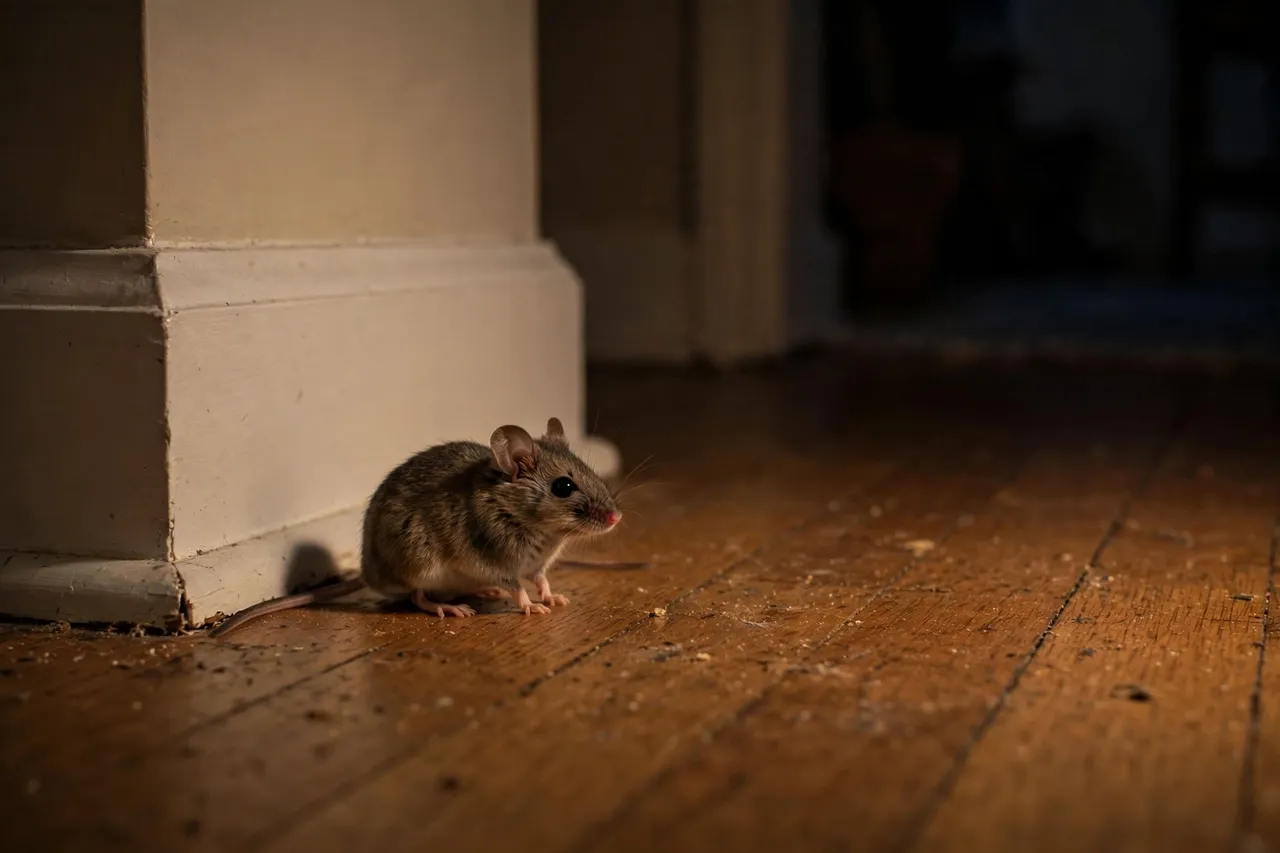
Deer mice are easy to recognize once you know the signs. They are two-toned — warm brown above, bright white below, with white feet that make them look dipped. Their ears are large and nearly bare, their eyes are big and dark, and their tails are furred and bicolored, dark on top and white underneath. Their droppings are small and pointed at both ends. Around Provo, deer mice live outdoors through the warm months in rock retaining walls, foothill brush, juniper stands, woodpiles, and outbuildings. Houses enter the picture when the weather turns.
Deer Mouse Control, Done Right
Because deer mice come from outside habitat rather than living permanently in walls, the center of the job is different from house mouse work. Trapping matters, but sealing matters more: as long as the routes from the foothills into your attic stay open, new deer mice will keep replacing the ones removed. We also treat cleanup as a safety task, not a housekeeping task, because of the hantavirus concern. Everything below follows that logic.
How We Get It Done
Confirm the species. We check droppings, nesting sites, and any caught or seen animals to confirm deer mice versus house mice. The plan differs, so this step is not a formality.
Map the high routes. Deer mice climb. We inspect rooflines, eaves, chimney flashing, utility line entries, and tree or shrub contact with the roof, alongside the ground-level gaps — garage corners, vents, foundation penetrations.
Remove with traps, not poison. Traps go along attic joists, wall tops, and travel routes where we can retrieve and confirm every catch. A poisoned deer mouse dying in a wall void trades a live problem for a smell problem and risks pets and the owls and hawks that hunt the bench.
Clean with wet methods. Droppings and nesting areas are sprayed down with disinfectant before anything is touched — never swept or vacuumed dry. Contaminated material is bagged and removed with protective equipment on.
Seal the perimeter, top and bottom. Entry points are closed with chew-proof materials. For bench homes, this almost always includes roofline work that ground-focused pest services skip.
Signs You Need Deer Mouse Control
Watch for droppings appearing in the attic, garage, or along exterior walls in September through November; scratching or light running sounds overhead at night, especially after a cold snap; nests of shredded insulation, paper, or fabric in stored boxes and shed corners; a mouse seen outdoors near the foundation at dusk with that unmistakable two-tone coat; and droppings on top of wall plates or along attic joists rather than in kitchen areas — deer mice favor high, quiet spaces. One more Provo-specific sign: activity that starts right when heating season starts. That timing almost always points to foothill mice coming in from the cold, not a resident house mouse population.
Bench homeowners in Edgemont, Rock Canyon, Indian Hills, and Oak Hills should be especially alert. Your lots border deer mouse habitat directly, and homes there can pick up mice within days of the season's first hard frost — every year, like clockwork, until the house is properly sealed.
Honest Advice Before You Book
If you find a small number of droppings in an open garage, you can reasonably glove up, wet the area with a disinfectant spray, wipe it up with disposable towels, and set traps along the wall. What you should not do — and this is the single most important safety point on this page — is dry-sweep or vacuum mouse droppings anywhere, and you should not climb into a heavily contaminated attic or crawl space to handle it yourself. Hantavirus is uncommon, but it is serious, and the exposure route is exactly that dusty cleanup. Also know that one or two traps rarely finish a deer mouse job on a bench home: if the roofline and garage corners stay open, you are running a motel, not solving a problem. Call us when droppings are widespread, when activity is in the attic, or when the same problem has returned for a second fall in a row.
Deer Mouse Control FAQs
How can I tell a deer mouse from a regular house mouse?
A deer mouse looks almost two-toned: rich brown or gray-brown on top with a clean white belly and white feet, plus noticeably large ears and big, dark, slightly bulging eyes. Its tail is furred and also two-toned — dark on top, white underneath. A house mouse is one dull gray-brown color all over, belly included, with smaller ears and eyes. If the mouse in your attic looks a little like a tiny deer, that is exactly what it is.
Why do deer mice need special handling?
Deer mice are the species that carries hantavirus in Utah. The virus is shed in their urine and droppings, and people are exposed when dried droppings or nesting material get disturbed and dust goes airborne. That is why we never dry-sweep or use a household vacuum on deer mouse contamination — areas are wetted down with disinfectant first and handled with protective equipment.
I live on the bench. Why is my house hit every fall?
Bench neighborhoods like Edgemont, Rock Canyon, and Indian Hills back directly onto foothill scrub where deer mice live all summer. When cold comes off the Wasatch, your home is the nearest warm structure. Deer mice are also strong climbers and jumpers, so they use rooflines, tree branches, and utility lines that valley-floor mice never reach. Sealing has to include the roof, not just the foundation.
Can I just set traps myself for deer mice?
Trapping a deer mouse is no harder than trapping any mouse — the risk is everything around it. Reaching into an attic full of droppings, moving contaminated insulation, or sweeping up a nest area without protection is where exposure happens. If you have seen one deer mouse and there are few droppings, careful trapping with gloves on is reasonable. If the attic or crawl space shows heavy droppings or nesting, let us handle the removal and cleanup safely.
Related Mice Control Services
Mice Control
Our full mice control service for Provo homes — inspection, removal, exclusion, and cleanup.
Mice Control →Mice in the Attic
Where deer mice usually end up. Clearing attic infestations and contaminated insulation safely.
Mice in the Attic →Mouse Removal
Trapping-based removal with confirmed catches, and the follow-up sealing that keeps homes mouse-free.
Mouse Removal →Deer Mice in the Attic?
Don't sweep it, don't vacuum it — call Provo Rodent Pros. We'll confirm the species, remove them safely, and seal the high routes they used to get in.
Call (385) 406-1774